Fast, Cheap, or Good: The Conundrum of Compromise and How to Pick the Perfect Pair
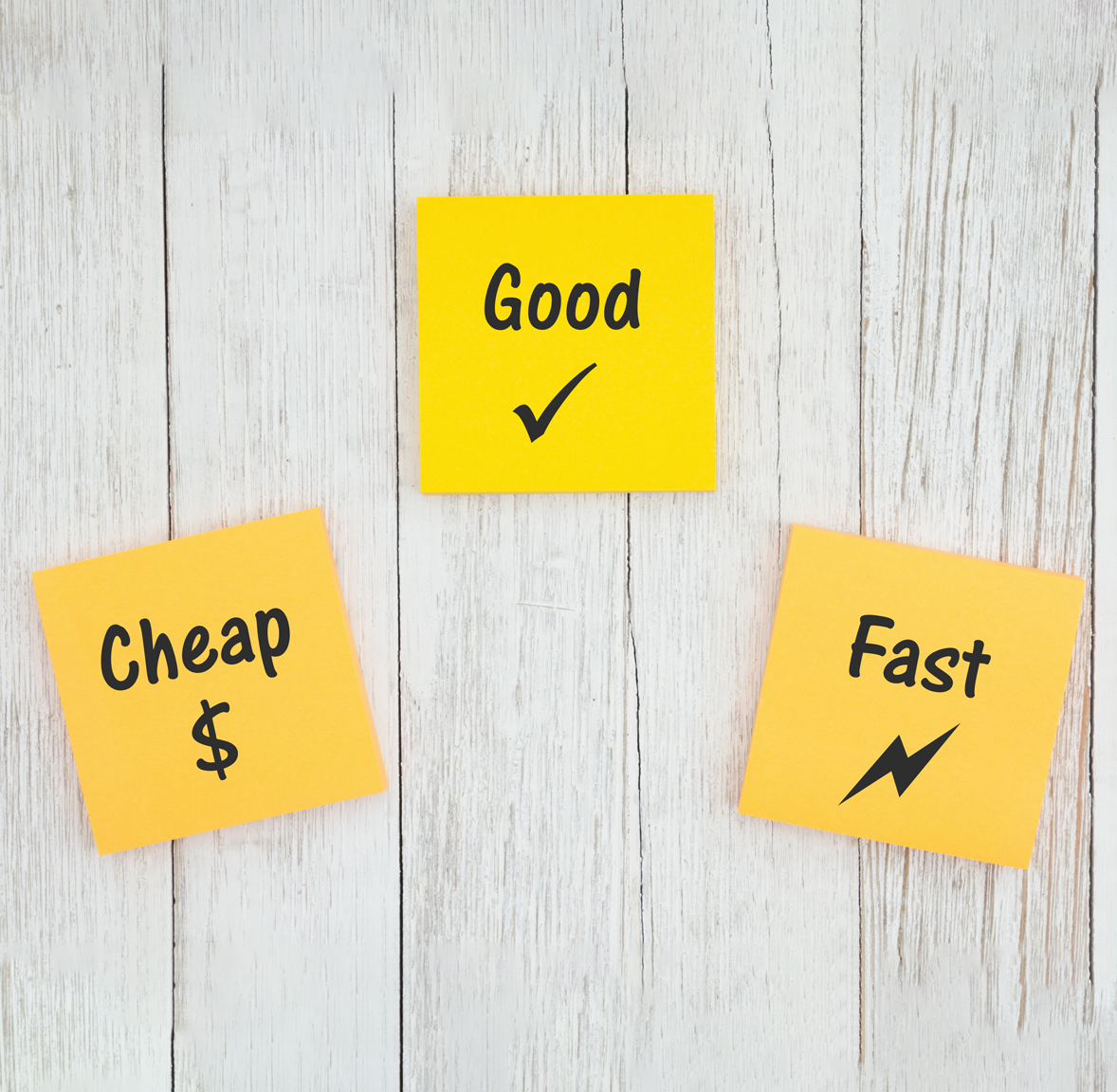
When it comes to decision-making in our daily lives, we often face a trifecta of options: fast, cheap, and good. The challenge is that you can usually only pick two out of three of these qualities. So, for example, if you want something fast and cheap, it may not be good. If you want it cheap and good, it may not be fast. And if you want it fast and good, it may not be cheap.
Knowing how to pick and balance the two out of three in different scenarios can help you make informed and effective decisions. This principle works in business, personal projects and everyday tasks. This method can also be used as a questioning tool to help both you and your customers understand what is wanted when giving prices or quotes for potential business.
Fast is about getting things done quickly. When something is done fast, the process is streamlined and the delivery times are minimized, however, this can sometimes lead to compromises in quality (good) and additional or increased costs (cheap).
Cheap is all about cost-effectiveness or cost savings, however, these savings often come at the expense of quality (good) and speed (fast).
Good refers to the quality the product or the end result of a service. Achieving high quality (good) usually comes at a cost (cheap) and may require more time (fast) to reach the high standard end result.
It is important to understand you and your customer’s priorities and where you are both willing to compromise to find a balance. For example, if quality (good) is your top priority, you may need to accept a longer timeline (fast) or higher costs (cheap). When faced with a decision, consider what matters most for your specific situation.
The Fast, Cheap or Good Triangle is more of a helpful guideline than a hard rule. It can layout the framework for decision-making by helping you navigate your options more effectively. The key is to evaluate your priorities based on the context of each situation. By recognizing the trade-offs between fast, cheap, and good, you can make informed decisions that align with your values and priorities. Choose two out of three wisely and you should end up with the results that meet your needs.
As you make decisions, reflect on what will truly serve you in the long run, and don’t hesitate to invest in what matters most.
Do you want to learn about more tools and methods to help you and your customers understand each other? Subscribe to Pet Business Network’s newsletter for more business tips and ideas.