Belly Bands and Marking: A Temporary Fix or Long-Term Problem? Insights from Pet Experts
"Don’t just sweep the issue under the rug (or into a belly band)! Get to the root of why your dog is leaving their mark indoors. Belly bands? They’re like putting a Band-Aid on a leaky faucet—it works… until it doesn’t. Every drop tells a tale—a silent song of stress, status, or simply saying hello. Let’s fix the plumbing instead!
If your home smells more like Fido than fresh linen, this one’s for you. Because happy homes start with happy paws."
Marking behavior in dogs, especially males, is a common challenge for pet owners. The use of belly bands—absorbent wraps designed to catch urine—has become increasingly popular among dog owners. However, these bands mainly manage symptoms rather than address marking behavior's root causes.
Understanding Marking: More Than Just a “Bad Habit”
Urine marking is a natural canine communication method used to signal territory, social status, or stress. Research indicates that environmental changes such as new pets, moving homes, or the loss of a family member can trigger up to 45% of indoor marking incidents. Dogs may also mark more frequently when there is tension between household pets or when exposed to unfamiliar scents. For example, in multi-dog households, marking behavior can increase by about 50% during shifts in social hierarchy.
Key Statistics on Canine Urine Marking and Related Behaviors
• Approximately 30% of dogs adopted from rescues exhibit marking behaviors within the first six months post-adoption, often triggered by stress and adjustment to new environments.
• As neutering reduces marking behavior in 80% intact male dogs, it is amongst the most effective first step in controlling marking.
• Also, despite neutering, about 20% of male dogs continue to mark indoors, often due to anxiety, territorial instincts, or environmental stressors.
• Small male dogs mark more frequently than larger dogs, sometimes angling their legs higher to exaggerate their size and social status.
• In multi-dog households, marking incidents increase roughly 50% during social hierarchy shifts or dominance struggles.
• Between 8% and 44% of animal returns to shelters are due to nuisance behaviors, including marking, with many returns occurring within the first month post-adoption.
• Positive behavior modification combined with neutering results in about 78% of dogs showing improvement in marking behavior within two weeks.
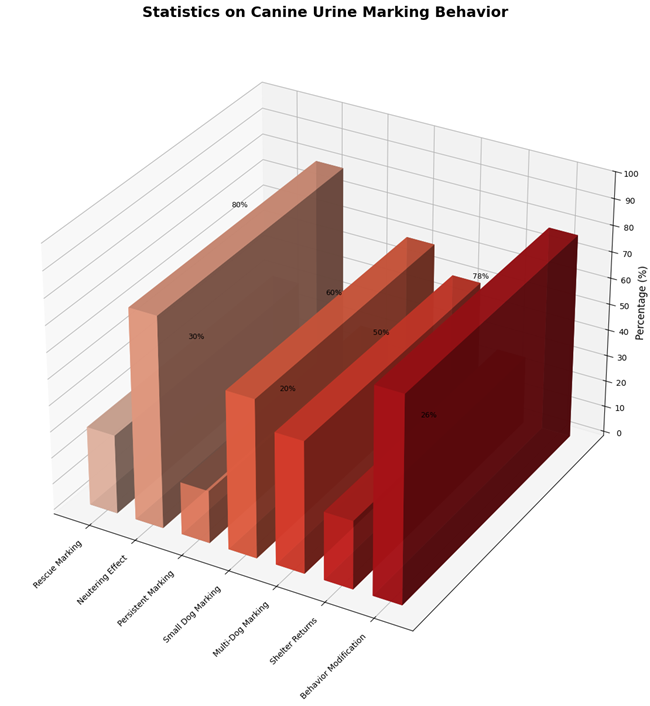
These statistics highlight the complexity of urine marking as a behavioral issue influenced by hormonal, social, and environmental factors, underscoring the importance of comprehensive management strategies beyond simple containment.
Also Read: Canine Olfactory Sensitivity to Human Stress: Implications for Behavior and Welfare
The Belly Band Dilemma: Pros, Cons, and Hidden Risks
Belly bands are often seen as a quick solution to prevent urine from soiling furniture and floors. While they can reduce cleanup stress—reported by about 85% of users—they do not correct the underlying behavioral causes. Improper or prolonged use can lead to:
•Skin Irritation and Infections: If not changed regularly, belly bands can cause skin irritation or urinary tract infections in roughly 20% of cases.
•Behavioral Reinforcement: Studies suggest that 60-65% of pet owners see no long-term reduction in marking when relying solely on belly bands, as these may inadvertently signal to dogs that indoor urination is acceptable.
In practice, belly bands can help manage hygiene but should be combined with behavior modification for effective retraining.
Case Study: When Belly Bands Fall Short
Belly bands, while helpful in managing the immediate mess of urine marking, often fall short when it comes to addressing the underlying behavioral and environmental causes of marking in dogs. Their use can sometimes mask the problem, making it more difficult for owners to identify and resolve the root triggers.
Environmental Triggers:
Dogs are highly sensitive to changes in their environment. New household items, furniture, visitors, or even changes in routine can become prime targets for marking. The anxiety or excitement brought on by these changes often leads dogs to mark as a way to reassert their territory or cope with stress.
Inconsistent Marking Patterns:
Alternating dry and wet belly bands may signal that marking is driven by anxiety or stress rather than a medical issue like incontinence. Dogs may mark more frequently during periods of heightened arousal, such as after visitors arrive or when new objects are introduced to the home. This inconsistency can make it challenging for owners to distinguish between behavioral marking and other urinary issues.
Social Dynamics in Multi-Dog Households:
Marking behavior often escalates in homes with multiple dogs, especially during periods of social tension or hierarchy shifts. Research indicates that dogs in multi-dog households exhibit more dominant or submissive behaviors based on their perceived rank, and marking can become a tool for asserting dominance or responding to perceived threats within the group. Temporary separations, such as one dog leaving for a walk with the owner, can prompt rank-related marking behaviors upon reunion.
The Limitations of Belly Bands & How Comprehensive Strategies May Help
Belly bands do not teach dogs not to mark; they simply prevent urine from reaching household surfaces. Prolonged or improper use can lead to skin irritation, urine scald, or infections, particularly if bands are not changed frequently—ideally every hour or as soon as they become soiled. Over-reliance on belly bands may also reduce owner vigilance, as the immediate stress of cleaning is lessened, potentially delaying effective behavioral intervention.
Behavioral Tracking and Intervention:
To effectively address marking, experts recommend using security cameras to identify which dog is marking and keeping a detailed diary of incidents. This helps pinpoint specific triggers, such as particular times of day, interactions, or environmental changes, allowing for tailored intervention strategies. Addressing relationships between dogs, managing anxiety with consistent routines, and using positive reinforcement is critical for long-term success.
The Reality of Indoor Marking: Key Insights and Statistics:
•House soiling, including marking and inappropriate urination, affects about 20% of pet dogs, making it one of the most common behavioral issues reported by veterinarians (Today's Veterinary Practice, 2023).
•New objects or furniture in the home increase marking behavior, as dogs instinctively mark unfamiliar items to assert territory; this environmental trigger is a common cause of indoor marking episodes (PetMD, 2022).
•Proper supervision and crate training reduce indoor marking incidents significantly, with supervised dogs showing up to a 70% decrease in marking compared to unsupervised dogs (Best Friends Animal Society).
•Belly bands are a temporary management tool and not a cure; over 60% of owners report no lasting behavioral improvement when relying solely on belly bands without training (San Francisco SPCA).
•Failure to frequently change belly bands can lead to skin irritation or infections in approximately 20% of dogs, highlighting the importance of hygiene when using these devices (VCA Animal Hospitals).
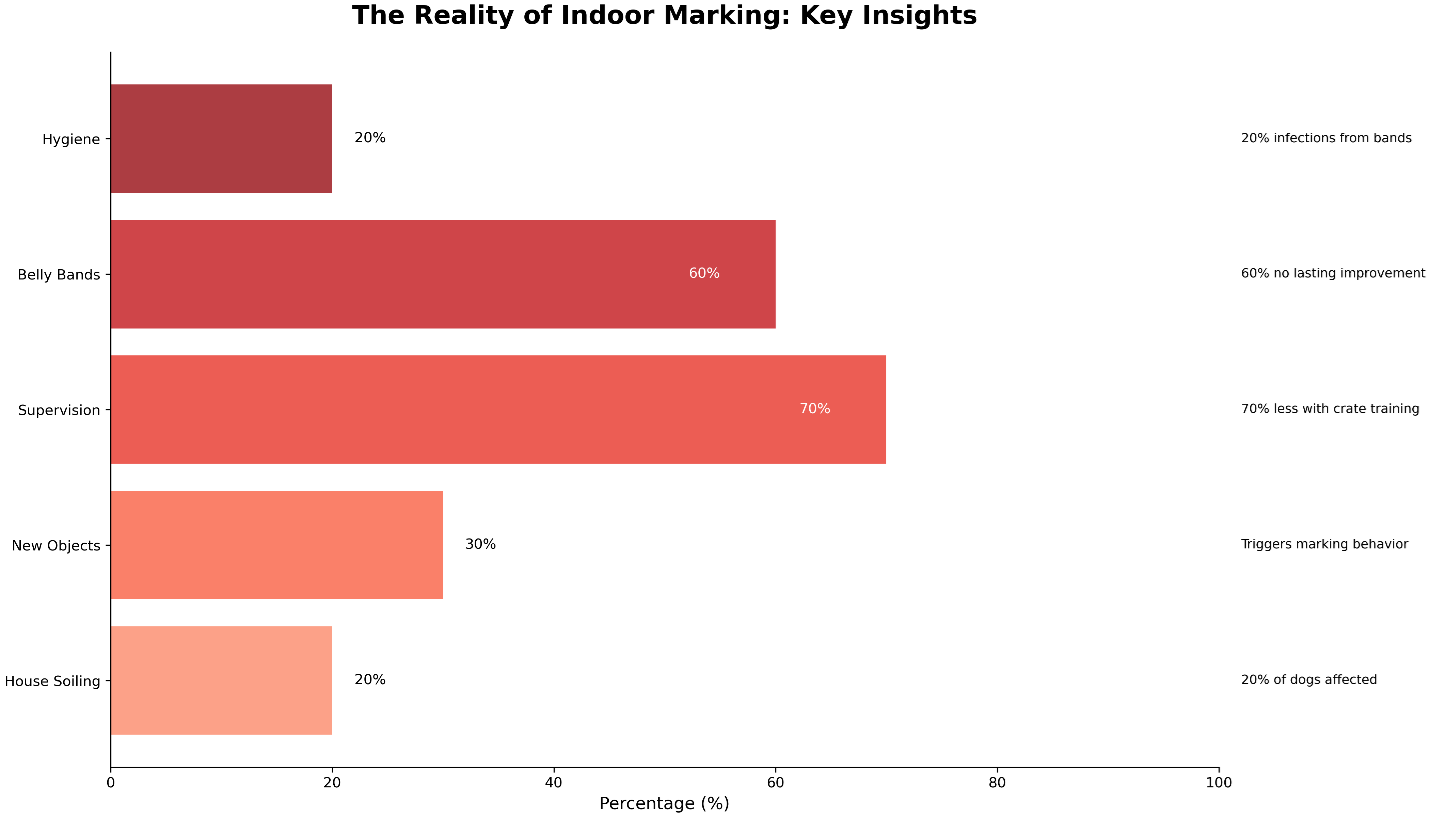
These findings underscore that while belly bands can be a helpful short-term management tool, they are not a substitute for addressing the behavioral and environmental causes of marking. Comprehensive strategies—including environmental management, behavior modification, and consistent supervision—are essential for lasting improvement.
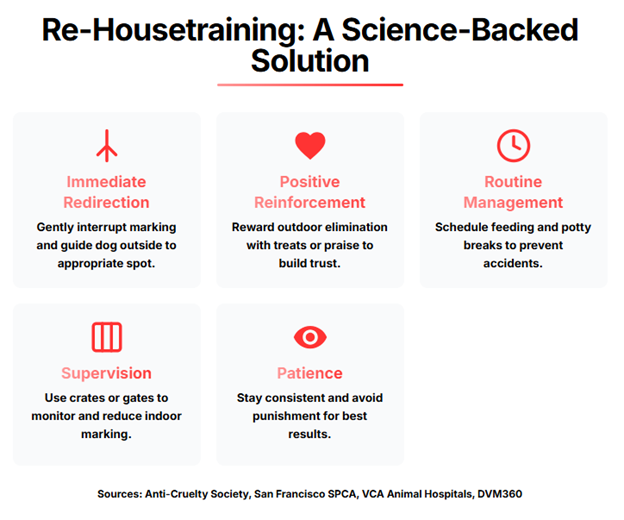
Re-Housetraining: A Science-Backed Solution to Overcome Marking Behavior
Re-housetraining a dog that exhibits marking behavior requires a structured, patient, and consistent approach grounded in behavioral science. Experts emphasize that supervision, positive reinforcement, and routine management are key elements to retrain dogs effectively and reduce indoor marking over time.
Immediate Redirection: Interrupt and Guide Outside
One of the foundational steps is to interrupt marking attempts immediately. When you notice your dog beginning to mark indoors—signaled by sniffing, circling, or leg lifting—gently but firmly redirect them by attaching a leash and taking them outside to an appropriate elimination spot. This interruption helps the dog associate indoor marking as undesirable and outdoor elimination as the correct behavior.
Positive Reinforcement: Reward Desired Behavior
Positive reinforcement is crucial for encouraging the dog to repeat the desired behavior. When your dog successfully eliminates outdoors, immediately reward them with high-value treats, enthusiastic praise, or playtime. Timing is critical; rewards must be given right after the behavior to reinforce the connection. This method builds motivation and trust, making the training process enjoyable and effective.
Routine Management: Scheduled Potty Breaks and Water Control
Creating a consistent daily schedule for feeding, watering, and potty breaks establishes predictability, which dogs thrive on. Limiting water intake in the evening and scheduling frequent outdoor potty breaks—typically every 2 to 4 hours—helps prevent accidents and reduces marking urges. A regular routine supports bladder control and helps the dog learn when and where elimination is appropriate.
Supervision and Environmental Control
Close supervision is essential, especially during the early stages of re-housetraining. Using tools such as baby gates, crates, or tethers indoors can prevent unsupervised access to areas where marking is common. Crate training leverages a dog’s natural instinct to keep their sleeping area clean, reducing accidents and marking indoors. Additionally, minimizing distractions during potty breaks helps the dog focus on the task.
Patience and Consistency: The Cornerstones of Success
Re-housetraining can take time, particularly with adult dogs or those with ingrained marking habits. Consistency in applying these methods daily, combined with patience and understanding, yields the best results. Avoid punishment, as it can increase anxiety and worsen marking behavior. Instead, focus on gentle redirection and positive reinforcement to build confidence and trust.
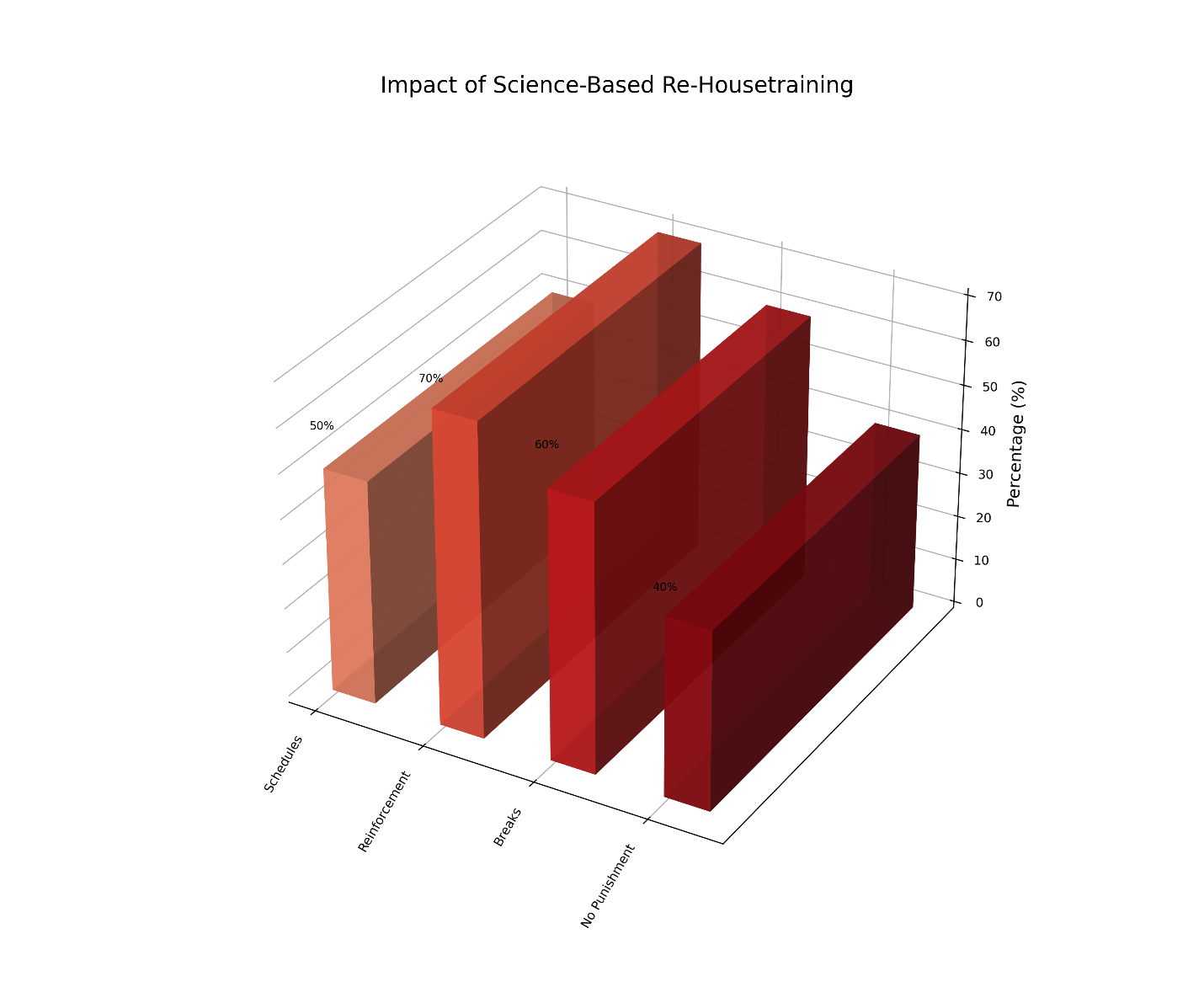
Key Statistics: The Impact of Science-Based Re-Housetraining
• Dogs with structured potty schedules and crate training are 50% less likely to have indoor accidents compared to dogs without such routines (Anti-Cruelty Society, 2023).
• Positive reinforcement training increases the likelihood of successful behavior change by up to 70%, compared to aversive or punishment-based methods (San Francisco SPCA, 2024).
• Frequent and predictable potty breaks reduce marking incidents by over 60% in dogs prone to anxiety-related marking (VCA Animal Hospitals, 2022).
• Avoiding punishment and focusing on reward-based methods decreases stress-related marking behaviors by approximately 40%, promoting better long-term outcomes (DVM360 Expert Advice, 2020).
Re-housetraining is a scientifically supported, practical approach to resolving marking behaviors in dogs. By combining immediate redirection, positive reinforcement, routine management, and environmental control, pet owners can retrain their dogs to eliminate outdoors reliably. This method not only addresses the symptoms but also rebuilds the dog's trust and confidence, leading to lasting behavioral change and a cleaner, happier home environment.
The Final Verdict on Belly Bands
Belly bands are effective as a short-term management tool to maintain cleanliness but should never replace comprehensive behavior modification. The ultimate goal is to rebuild your dog’s trust and routine for outdoor elimination, not to mask the symptoms of marking.
In conclusion, addressing marking behavior in dogs requires a combination of management tools and science-backed re-housetraining to achieve lasting results, while short-term aids like belly bands serve only as temporary solutions.
If you're overwhelmed by your dog's marking behavior, know you're not alone, and help is available. We encourage you to visit our site, where you can find trainers, behaviorists, and veterinarians who specialize in helping you resolve this issue. They can provide the understanding and guidance you need to help your furry friend overcome this challenge and restore harmony at your home.
Pet Business Network (PBN) empowers Pet Businesses by providing a trusted platform that boosts visibility, fosters collaboration, and channels business growth into meaningful support for animal welfare—because when your pet business thrives, so do the pets you serve.
From Ambition to Impact—Let’s Write the Story of Success and Compassion Together, Explore PBN Membership Options Today.
Unleash Your Business Potential, Transform Animal Lives—Join PBN Today!
The Pet Business Network (PBN) is more than just a directory—it’s your gateway to growth and a force for good in the pet world. Imagine affordable marketing tools, exclusive member benefits, and the credibility of a professional network—all while driving a mission that saves lives. Here’s how PBN empowers you to make an impact:
Your Success Fuels Their Future
At PBN, we connect passionate pet businesses with dedicated pet owners, creating a legacy of trust and transformation. As the gold standard in the pet industry, we ensure customers find you effortlessly. But we’re more than a platform—we’re a movement for change:
• Boost Visibility: Dominate search results with SEO-optimized listings, social media exposure, and PR opportunities. Be the go-to answer for searches like “dog anxiety expert” or “pet grooming near me.”
• Forge Connections: Partner with like-minded businesses through PETworking. Share promotions, solve challenges, and grow together.
• Profit with Purpose: A portion of every membership fee supports animal welfare initiatives. Over $2,200 has already been donated—and the momentum is just beginning.
Why Choose PBN?
• Exclusive Perks: Unlock discounts on pet products, software, and marketing tools.
• Credibility & Trust: Gain recognition from a professional association that pet owners trust.
• Make an Impact: Your success funds shelters, therapy programs, and groundbreaking research.
Ready to Elevate Your Business and Save Lives?
• Get Listed: Stand out by selecting categories and keywords matching customers' searches.
• Dominate Your Niche: Leverage SEO, SEM, and social strategies to rise above the competition at no extra cost.
• Save & Serve: Access member-exclusive savings while supporting life-changing animal welfare initiatives.
Join PBN Now—Because When Your Business Thrives, Pets Thrive. Let’s Build a Future Where Business Success and Animal Welfare Go Hand in Paw.